Journal · The people · 3 min read
The Royal Highland Festival Laya
Finding silence and song in the clouds of Bhutan
Laya, Bhutan
To reach Laya is to step out of linear time and into a landscape governed by the ancient breath of the mountains.
Ascent into the Clouds
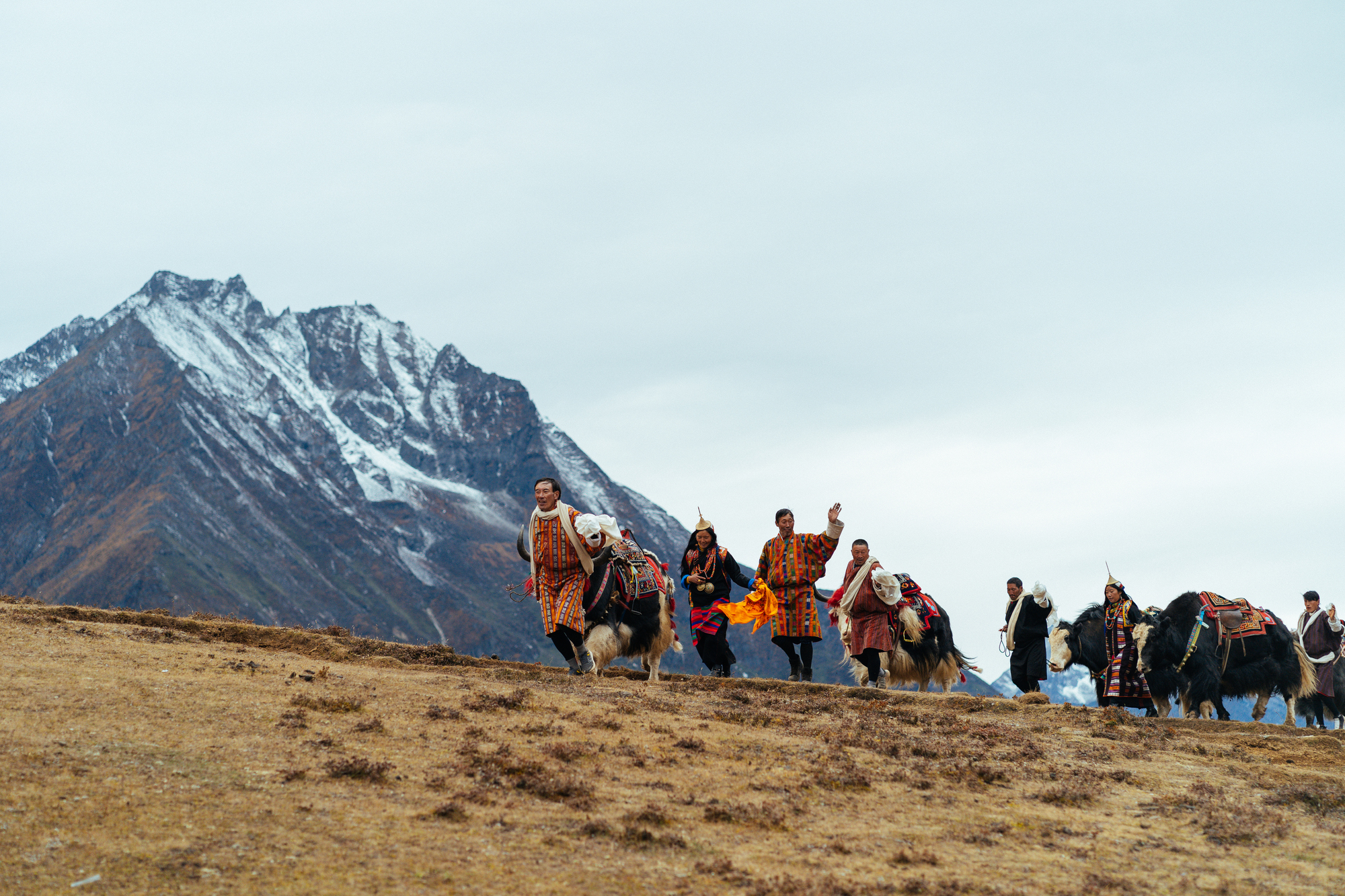
The path to Laya demands a recalibration of the self and a deliberate shedding of urban habits. As the trail climbs beyond four thousand meters, the air thins until it is sharp and crystalline, scented with the dry musk of juniper and the faint metallic tang of glacial melt. Here, the physical world narrows to the rhythm of breath and the crunch of boots on frosted earth. Arrival is marked by the sudden opening of a valley where stone houses appear to have grown from the mountainside. In this isolation, the modern world fades into a pale memory, overshadowed by the unyielding granite spires that guard this sanctuary.
“The mountains do not speak, yet they demand a response. In Laya, that response is song. It is a haunting, resonant sound traveling between the peaks, carrying the history of a people who have mastered the art of living in the thin air.”
Traditional Layap proverb
The Gathering of the Clans
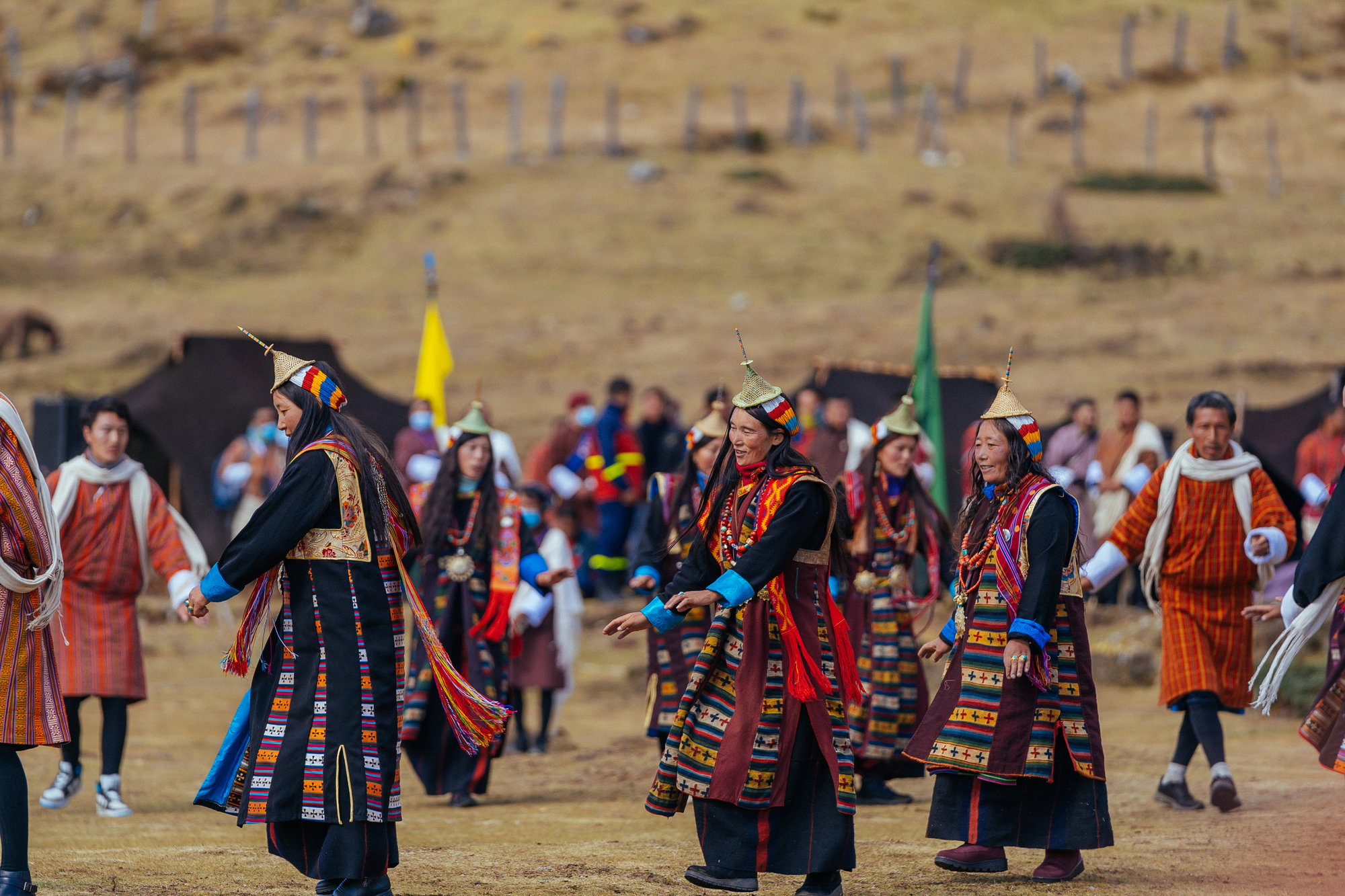
The Laya Festival is a homecoming that transforms the austere stillness of the mountains into a humming vitality. Women wearing distinctive bamboo hats, adorned with silver ornaments that catch the low sun, move with a rhythmic grace. There is an unspoken understanding threading through these gatherings, a collective memory held in the intricate embroidery of wool cloaks and the melodic inflection of their dialect. Every exchange is deliberate. Tea is poured with steady hands, the butter thick and golden, serving as both sustenance and bridge. Archery contests proceed with melodic taunts and songs of encouragement, a display of communal pride that exists simply because it is their way.
Cultural Insight: The Layap Hat
The conical bamboo hat, known as the Jamu/Balo, is unique to the women of Laya. Designed traditionally in the 8th century, it acts as a distinct symbol of Layap identity and is shaped to resemble a stupa (Pema Chorten)
The Architecture of Resilience
To observe a house in Laya is to understand the geography of survival. These structures, fashioned from local stone and timber, are built to withstand the biting winds sweeping down from northern glaciers. Inside, the hearth remains the gravitational center of existence, where stories are woven into the evening air. Life is stripped of excess. Everything present serves a purpose, from the yak wool hanging to dry to the prayer wheels turning in the breeze. There is an understated luxury in this simplicity, a clarity rarely found in the lowlands. It serves as a reminder that beauty resides in the harmony between human needs and the offerings of the land.
“We do not visit the mountains to conquer them. We come to allow them to conquer the noise within. In the thin air of Laya, the ego grows small, and the spirit finally finds room to expand.”
GoXimbo Guest Journals
Departure and the Echo
Leaving Laya is an exercise in reluctance. As the village shrinks against the vast canvas of the peaks, the valley silence follows like a shadow, eventually revealing itself as a profound gift. One returns to the world of noise with a different internal frequency, a quieter resonance that echoes the high passes and the slow turn of the prayer wheel. The memories of Laya are too fragile for casual conversation. They belong to the silence of the clouds. To carry them is to hold a secret piece of the world, a reminder that in the coldest corners of the map, there exists a warmth that defies the frost.
Read next
Letters from Bhutan
New stories, a few times a season.
Begin
Begin your own story
Every journey here began with a quiet conversation.
Begin Your Discovery10 questions · 3–5 minutes